January 13, 2026
January brings road salt, melting slush, and slick garage floors to New Jersey and Staten Island. If you’re tired of chalky concrete dust and slippery puddles, a professional garage epoxy floor can make winter safer, cleaner, and easier to maintain. Von Stroke Painting installs durable, slip-resistant epoxy systems throughout Morris County, Essex County, Passaic County, and Staten Island—engineered to stand up to Northeast winters and daily vehicle traffic.
Is epoxy slippery in winter? How to get real traction
People Also Ask: Is epoxy flooring slippery when wet? A properly specified system doesn’t have to be. The base epoxy provides the bond and chemical resistance; traction comes from the broadcast. We add slip-resistant media—quartz, vinyl flake, or aluminum oxide—into the coating to create micro-texture that grips shoes and tires, even with meltwater. For garages, we typically recommend a full broadcast flake system with a satin urethane or polyaspartic topcoat. It’s easy to squeegee, hides dirt between cleanings, and delivers dependable traction without feeling like sandpaper.
Road salt and slush: Will they damage an epoxy floor?
De-icers like rock salt, calcium chloride, and magnesium chloride are tough on bare concrete, causing scaling and white residue. A quality epoxy system with a UV-stable urethane or polyaspartic topcoat is highly resistant to de-icers, gasoline, oil, and winter tire softeners. We also “turn up” the coating a few inches onto the stem wall and install a neat floor-to-driveway transition so slush and salt stay on the coated surface. Routine rinsing keeps the film clear and glossy through the season.
Cold-weather installation that actually works
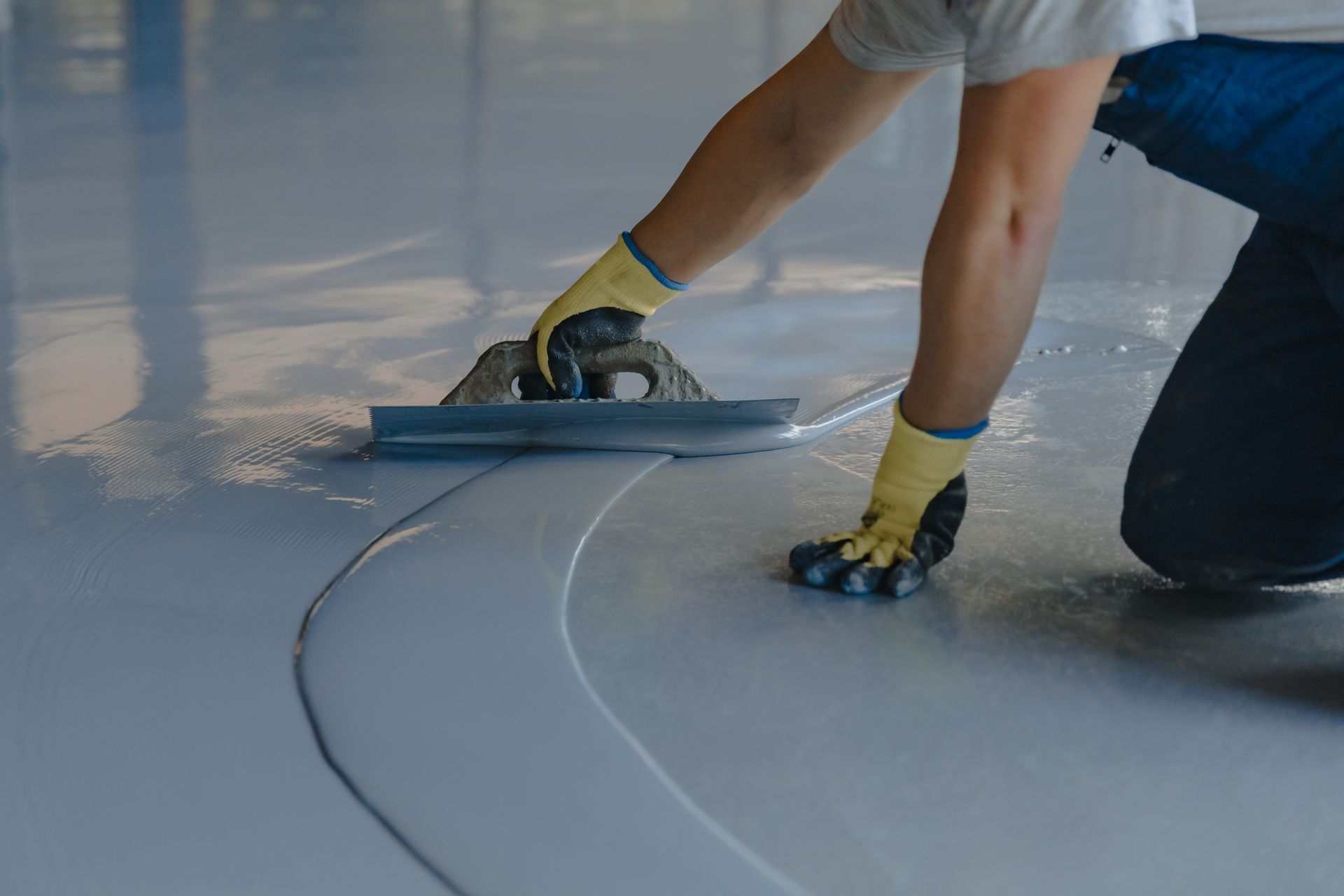
Winter installs are absolutely possible when you manage temperature, moisture, and timing. Our crews use industry-standard prep and cold-friendly chemistry to keep projects on schedule in North Jersey and Staten Island.
Our winter-ready process includes:
- Moisture testing: Check slab relative humidity and vapor emissions to prevent future bubbles.
- Shot blasting/grinding: Mechanically profile the concrete for long-term adhesion.
- Crack and joint repair: Fill and bridge movement points to minimize telegraphing.
- Temperature control: Verify slab and air temps; deploy temporary heat if needed.
- Antimicrobial/low-odor products: Keep odors low for attached garages and living spaces.
- Texture broadcast: Choose the right anti-slip media for your use and cleaning routine.
- UV-stable topcoat: Polyaspartic or urethane for chemical resistance and fast return to service.
Most garages are walkable within 12–24 hours and drivable in 48–72 hours, depending on product and temperature. In actively heated garages, cure times can be even faster.
Local factors we account for in NJ and Staten Island
- Morris County: Colder overnight temps and frequent freeze-thaw cycles demand low-temperature cure windows and careful dew point checks.
- Essex County: Older garages and historic homes may have oil-soaked or patched slabs; extra degreasing and repair ensure a uniform finish.
- Passaic County: Higher groundwater in some neighborhoods requires moisture mitigation or vapor-tolerant primers for long-term performance.
- Staten Island: Marine air and road spray can accelerate corrosion on uncoated thresholds; we address metal transitions and recommend salt-resistant topcoats.
Easy winter maintenance routine
Keep your floor looking new with a quick, simple plan:
- Daily/weekly: Squeegee meltwater toward the door; place an absorbent mat under parked cars.
- Monthly: Rinse with warm water and a pH-neutral cleaner; soft-bristle deck brush for corners.
- After storms: Sweep up salt granules to prevent abrasion from tire grinding.
- Avoid: Metal shovels, harsh acids, and gritty powders that can dull the finish.
Design choices that perform and look great
Full broadcast flake systems are winter workhorses: the variegated pattern camouflages day-to-day debris while providing traction. Neutral gray, taupe, or stone blends pair well with most vehicles and garage cabinetry. For a premium look, quartz aggregate delivers uniform color and excellent slip resistance; we can stripe or stencil zones for workbenches or home gyms without sacrificing durability.
Why choose Von Stroke Painting for your garage epoxy floor
Surface preparation is everything. We don’t “paint” concrete; we build a bonded system—profiled slab, moisture-aware primers, reinforced base coats, texture broadcast, and a protective topcoat. The result is a floor that resists salt, slush, hot-tire pickup, and everyday wear while staying easy to clean. Our low-odor approach keeps adjacent living spaces comfortable during winter installations.
Start the new year with a safer, cleaner garage
Upgrade to a slip-resistant, salt-resistant epoxy floor that’s ready for winter. Contact Von Stroke Painting for a garage floor consultation in Morris County NJ, Essex County NJ, Passaic County NJ, or Staten Island NY. We’ll assess your slab, recommend the right texture and topcoat, and schedule a fast, clean install—so you can tackle January with a garage that works as hard as you do.